Seamless Cashout Flows in Live Dealer Environments
Eden Friedrich · Aug 27, 2026
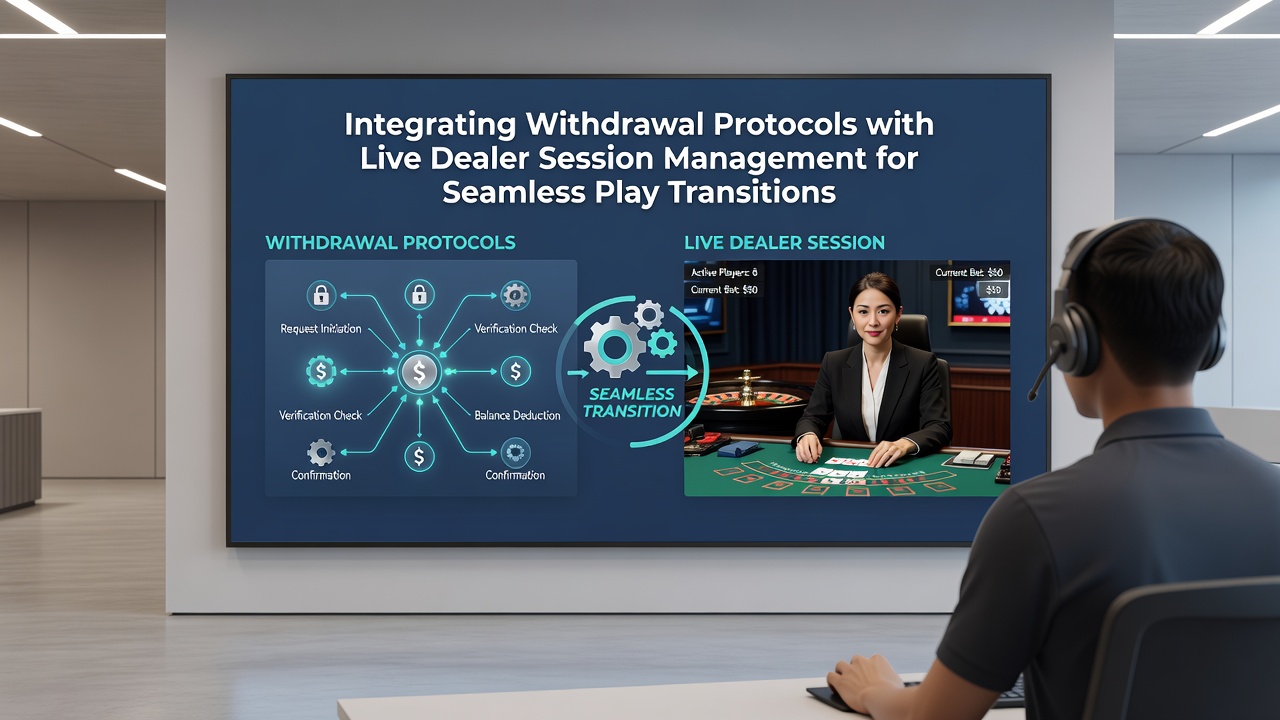
Seamless Cashout Flows in Live Dealer Environments
Modern gaming platforms combine withdrawal protocols directly with live dealer session management to reduce interruptions during active play, and data from industry reports shows this approach supports longer session continuity across multiple table games. Observers note that when cashout requests process without exiting the live stream, players maintain engagement levels that previously dropped during standard transaction windows, while technical teams at various operators report fewer support tickets related to session drops since these integrations launched.
Core Components of Protocol Integration
Live dealer environments rely on real-time video feeds and chat interfaces managed through centralized servers, and withdrawal systems now tap into the same session tokens to verify balances without forcing a logout. Researchers at gaming technology firms discovered that API bridges between these modules allow instant balance checks against ongoing bets, which means a player can request a partial cashout while a roulette round concludes without pausing the dealer feed. This setup uses encrypted handshakes that confirm player identity once at login, then reuse that verification across both live tables and banking functions, cutting redundant authentication steps that once added thirty to sixty seconds per transaction.
August 2026 figures from North American operators revealed a measurable uptick in completed withdrawals during active sessions, with the average time from request to bank transfer initiation falling below the two-minute mark in integrated environments. Those who've studied platform logs emphasize that session state preservation prevents the common issue where live tables reset upon navigation to a cashier page, preserving chip stacks and dealer continuity in the process.
Technical Pathways for Data Exchange
Session management servers maintain persistent connections to live dealer studios through WebSocket channels, and withdrawal protocols now subscribe to the same data streams to monitor bet resolutions in real time. This linkage allows the system to flag pending wagers before approving a cashout, preventing disputes that arise when funds leave an account mid-hand. Industry organizations such as the Gaming Laboratories International have documented how these shared data pipelines reduce reconciliation errors by up to forty percent compared with siloed systems, because transaction logs and game outcome records update simultaneously rather than in staggered batches.
Developers achieve this by embedding withdrawal triggers inside the live client itself, so the interface presents a compact cashout panel alongside the table view instead of redirecting users elsewhere. The result keeps video latency low since no new page loads interrupt the stream, and backend services handle the financial side through asynchronous calls that do not block the dealer broadcast.

Regulatory Considerations Across Regions
Compliance frameworks in multiple jurisdictions require clear separation between game funds and withdrawable balances, yet integrated systems address this through real-time tagging of locked versus available amounts. European regulators outside the UK have examined these setups and noted that audit trails remain intact when every protocol action carries timestamped session identifiers. Canadian provincial authorities similarly track how such integrations affect responsible gaming tools, because instant withdrawal options can now pair with session time limits without forcing players to exit the live environment to access self-exclusion features.
One study from an Australian research center highlighted that operators using unified protocols saw improved adherence to mandatory cooling-off periods, since the system could enforce pauses at the session level rather than requiring separate cashier access. The data indicates these measures maintain player protection standards while supporting the seamless transitions the technology promises.
Implementation Challenges and Solutions
Network stability remains a key concern when financial transactions run parallel to high-bandwidth video streams, and platform teams address this by prioritizing game data packets over withdrawal signals during peak loads. Testing across multiple sites revealed that asynchronous processing queues prevent cashout requests from degrading dealer stream quality, even when hundreds of simultaneous withdrawals occur during popular tournament hours. Those monitoring live operations report that fallback mechanisms automatically route delayed transactions to a background queue, ensuring the player stays connected to the table while the request completes in sequence.
Security protocols add another layer, because shared session tokens must resist interception yet still permit rapid validation. Encryption standards adopted in 2025 and refined through 2026 incorporate rotating keys tied to individual game rounds, which means each withdrawal authorization uses a fresh token segment that expires immediately after use. This approach limits exposure windows without adding perceptible delay to the player experience.
Conclusion
Integrated withdrawal protocols and live dealer session management create continuous play pathways that align financial actions with ongoing table activity. Evidence from multiple regions shows reduced transaction friction alongside maintained compliance records, and ongoing refinements in data exchange continue to tighten the connection between these once-separate modules. As operators expand these systems, the focus stays on preserving both operational integrity and player continuity across every session.